Here's what's strange about these two they don't need to soak deep into your tissue to work. They act right where you put them, on a specific receptor in your skin that your body uses to process pain signals. Researchers have mapped this mechanism in detail. It's one of the only things in this entire category that holds up under real scrutiny.
That cooling sensation you feel from mentholated products? That's not a side effect. That's the actual mechanism, working, in real time.
For the first time in two years of buying pain creams, I had something I could actually explain, not just hope was true.
I Started Looking At Everything Differently
Once I understood that, I couldn't unsee it.
I went back through every cream I'd ever bought and started asking a simple question: is this brand telling me what's actually proven, or just telling me what sounds impressive?
Almost all of them failed that test.
Big words. Vague mechanisms. Phrases like "restores cellular energy" and "floods your tissue with bioavailable magnesium" are phrases that sound scientific but that, as far as I could find, nobody has actually proven happen the way they're described.
I wasn't looking for a miracle anymore. I was looking for a company honest enough to tell me what their product actually does, and not pad that out with language designed to sound more impressive than the evidence supports.
That's a much smaller task. And it turned out to be a lot harder to find than I expected.
What I Finally Found
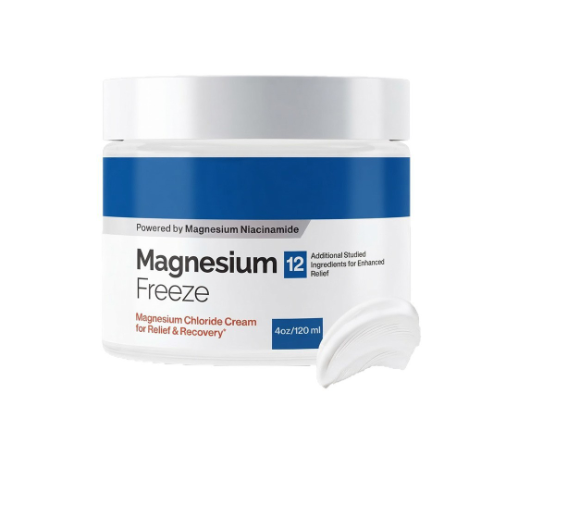
That's how I came across Magnesium Freeze, made by a company called Peak Health Research.
What got my attention wasn't a dramatic claim. It was the opposite.
They weren't promising to repair my joints or rebuild cartilage overnight. Their whole formula was built around that same cooling-then-warming mechanism I'd just spent weeks reading about the one part of this entire category that's actually backed by real, repeated science.
I'll be honest. I ordered it expecting to add a fourth jar to the pile of creams that did nothing.